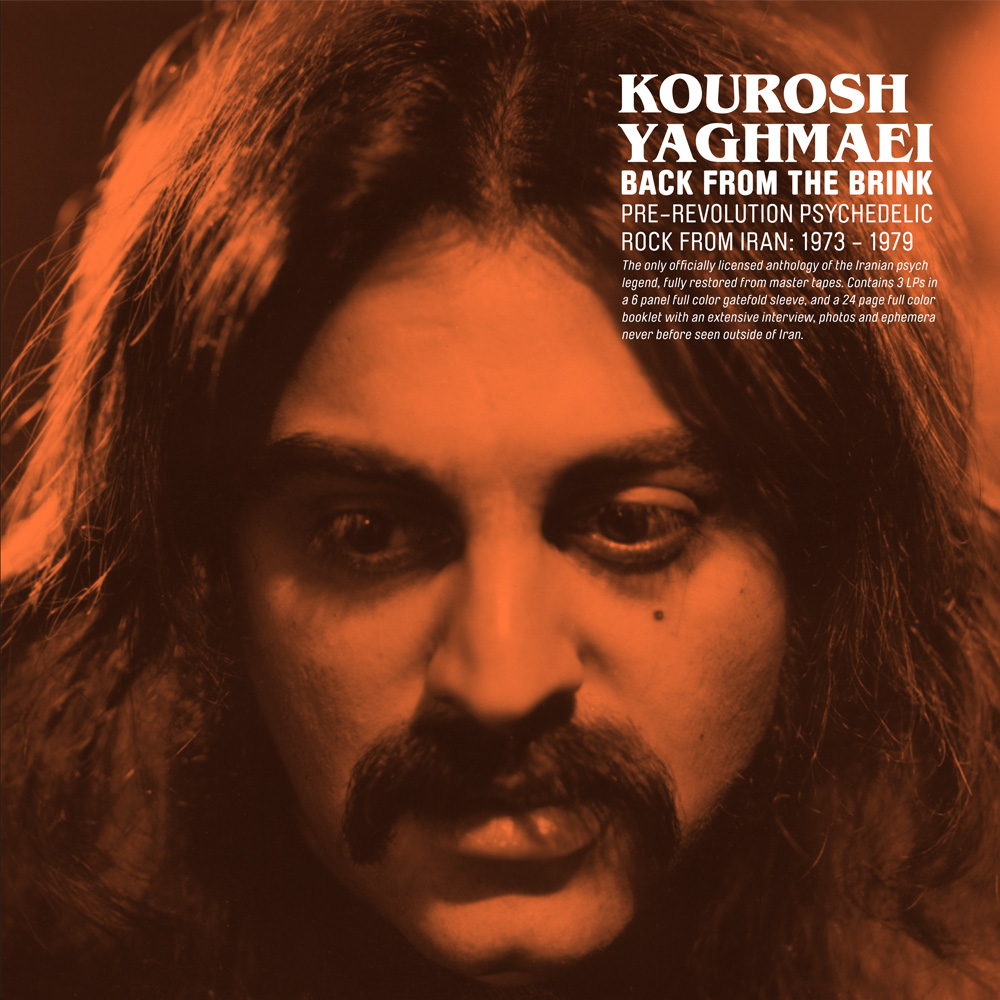
New compilations breathe fresh life into the songs of Kourosh Yaghmaei and Erkin Koray
Not too long ago, at the foothills of the Alborz mountains and on the shores of the Bosphorus, two lanky, long-haired rockers forever changed the face of Persian and Turkish rock music. While still revered and occasionally referenced in Iran and Turkey, the psychedelic, fuzz-laden grooves of Kourosh Yaghmaei and Erkin Koray have been seldom heard or appreciated in the West. However, with the recent release of two incredible compilations, that [hopefully] won’t remain the case.
The first of these compilations, Back from the Brink, is a two-disc celebration of Kourosh Yaghmaei’s most well-known numbers, recorded between 1973 and 1979, before the Islamic Revolution. Although Western fans of collections such as Pomegranates will most likely be acquainted with Yaghmaei’s most popular song, Gol-e Yakh (Ice Flower), this new compilation - along with a sumptuous booklet and singles packaged in their original sleeves - will introduce listeners to some of the best material of his entire career.
From serene, melodic tunes such as Paeez (Autumn) and Leila, to the psychedelic freakout of Ghazal (Gazelle), and all-out rockers such as Shahre Cheshmat (The City of Your Eyes), the album is incredibly diverse in its moods and sentiments. As well, Back from the Brink features a host of songs that even Iranians themselves may not be too familiar with, such as the foreboding, Omar Khayyam-inspired Dar Enteha (In the End), and the eerie Niyayesh (Prayer), making the album even more of a treasure. Considering the fact that until the release of this wonderfully remastered compilation, Yaghmaei fans had to resort to low-quality MP3s and grainy Youtube videos, Now-Again Records have done wonders in making his songs accessible to all, and breathing new life into them.
Fans of world music will revel in the exotic sounds of the golden years of Turkish rock music and Iran’s pre-Revolutionary halcyon days
As with Back from the Brink, Seattle-based Sublime Frequencies’ collection, Meçhul, serves as a great primer for the music of Erkin Koray. Along with contemporaries such as Bariş Manço, Cem Karaca, and the folk-rock group, Moğollar, Koray was - and still is - regarded as one of the forerunners of Turkish rock and psychedelia. Known for his long hair (which shocked more conservative Turks, who went so far as to threaten him), outlandish Bowie-inspired makeup and outfits, and his heavy-hitting, electric take on Anatolian folk music, Koray was indeed, a Turkish rock god in every sense of the word.
Although not as sonically diverse as Back from the Brink, Mechul is aural bliss for collectors of rare, quality psychedelia. As well, unlike Back from the Brink, this album is in no way a collection of Koray’s best works, or most well-known numbers. Rather, it is an assortment of singles and rarities recorded between 1970 and 1977. Featuring Koray’s fuzz-drenched electric guitar and baglama, along with his signature nasal vocals on almost every track, Meçhul is an all-out rock and roll extravaganza, and - you knew the punchline was going to come sooner or later - an absolute Turkish delight. Although all the songs are equally heavy-hitting in their own right, it’s songs such as the Greek-flavoured Cümbür Cemaat, the driving Hadi Hadi Ordan, and the acerbic Sevdiğim, which for me, are the album’s best moments.
While these two compilations might, to the lay listener, seem too obscure and esoteric, serious record collectors and fans of world music will revel in the exotic sounds of the golden years of Turkish rock music, and Iran’s pre-Revolutionary halcyon days.
